Miscarriage

spontaneous fetal loss before 24 weeks gestation ND </= 500G

causes

  • 1st trimester
    • chromosomal abnormalities
    • PCOS
    • APS (antiphospholipid syndrome)
    • endocrine disorder (untreated DM or thyroid disease)
    • uterine abnormalities (submucosal fibroid, subseptate uterine, endometrial polyp)
    • infection: TORCHES
  • 2nd trimester
    • Cervical incompetence
    • Asherman syndrome
    • bacterial vaginosis
    • uterine abnormalities (higher in 2nd trimester)
    • thrombophilias
    • infection: TORCHES
    • bactrerial vaginosis

1. threatened miscarriage

  • PV bleed
  • viable fetus
  • os close
  • symptoms of pregnancy
  • uterus correspond to date

mx:

  • ABC
  • remove POC at os
  • put prostin for priming for cervical os 3hours prior to arrange for ERPOC

2. inevitable miscarriage

  • PV bleed (a lot)
  • abdominal pain
  • os open but no POC seen
  • viable fetus
  • uterus correspond to date

3. incomplete miscarriage

  • PV bleed (a lot)
  • abdominal pain
  • os open with POC seen
  • non viable fetus, thick ET, retained POC in uterus
  • uterus smaller than date

4. complete miscarriage

  • PV bleed (gush of blood) with POC
  • abdominal pain
  • os close
  • uterus empty, normal endometrial lining
  • uterus smaller than date

5. missed miscarriage

  • asymptomatic
  • os close
  • non viable fetus
  • uterus smaller than date
  • BhCG may still be produce by placenta

mx:

  1. repeat US after 7-14 days if in doubt.
  2. then arrange for ERPOC.
  3. TCA stat if passed out POC, PV bleeding, fever.
  4. psychological support and counselling.

6. septic miscarriage

  • PV bleeding and discharge
  • abdominal pain
  • history of amniocentesis
  • os open with POC
  • cervical motion tenderness
  • adnexal tenderness
  • uterus smaller than date
  • fetus non viable, thick ET, retained POC in uterus

mx: psychological support and counselling

7. recurrent miscarriage

more or equal to 3 consecutive miscarriage

  • risk factor
    • woman is ≥35 years of age and the man ≥40 years of age
    • smoking and alcohol
    • antiphospholipid syndrome

mx:

  • investigate the cause; DM, thyroid ds, renal ds, SLE
  • rule out uterine/cervical abnormalities
  • cervical cerclage for cervical incompetence
  • Pregnant women with antiphospholipid syndrome should be considered for treatment with low-dose aspirin plus heparin to prevent further miscarriage
resources

RCOG guidelines

Contraceptions

postpartum family planning aims to prevent unintended pregnancy and closely spaced pregnancies after childbirth

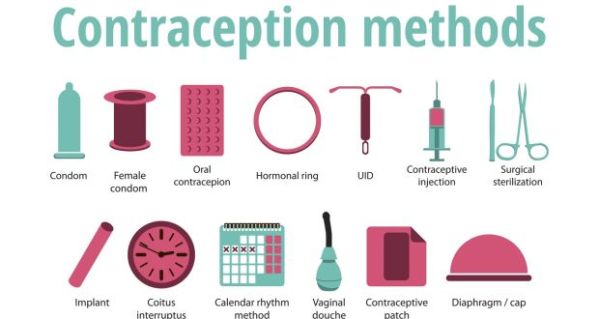
Method

  • Long acting reversible contraceptions (fit and forget) – most effective
    • IUD
    • Implant
  • hormonal contraception
    • COCP – combined oral contraceptive pill
    • POCP- progestogen- only contraceptive pill
    • Depo provera injection
  • barrier method
    • condoms – also protect against STI
    • internal condom –
  • emergency contraception
    • emergency contraceptive pill
    • copper IUD – (recommended if weight >70kg)
  • fertility awareness
    • calendar method
  • permanent contraception – most effective
    • vasectomy
    • tubal ligation

Long acting reversible contraceptions

IUD – Intrauterine Device

  • can start within 48 hours/ delayed after 4 weeks postpartum
  • prevent pregnancy for 5-10 years
  • eg; levonorgestrel – releasing IUD (Mirena) – up to 7 years
  • failure rates ; 1 in 1000 (0.001)
  • copper IUD does not interfere breastfeeding
  • return of fertility: immediate
  • side effect;
    • IUD may came out of uterus
    • infection
    • injury
    • hormonal IUD (mirena) cause spotting and irregular bleeding in first 3-6 months of use, headache, nausea, depression, breast tenderness
    • copper IUD increase menstrual pain and bleeding, intermenstrual bleeding. decrease within 1 year of use

Implants

  • release progestin
  • can start anytime
  • prevent pregnancy for 3-5 years
  • failure rates ; 1 in 1000 (0.001)
  • return of fertility: immediate
  • does not interfere breastfeeding
  • side effect;
    • irregular menses, intermenstural bleeding
    • mood changes
    • headache
    • acne
    • depression

Permanent Contraception

Female Sterilisation

  • can start within 7 days / after 6 weeks postpartum
  • failure rates ; 2 in 1000 (0.002)

Vasectomy

  • can start anytime
  • failure rates ; 1 in 1000 (0.001)
  • takes about 2 to 4 months for the semen to become totally free of sperm after a vasectomy. A couple must use another method of birth control or avoid sexual intercourse until a sperm count confirms that no sperm are present.

pros;

  • permanent birth control
  • no daily attention require
  • does not affect sexual pleasure

cons;

  • may regret
  • require surgery
  • may not be reversible

Hormonal contraception-

Progestogen – only injectable contraceptives (Depoprovera)

  • prevent pregnancy for 8-12 weeks ( 3 months )
  • can start anytime
  • failure rates ; 3 in 100 (0.03)
  • side effects: amenorrhea
  • return of fertility: months
  • does not interfere breastfeeding
  • side effect;
    • bone loss
    • irregular menses
    • headache
    • slight weight gain

Progestogen – only pills (POP)

  • contained progestin
  • taken continuously every day without a break
  • can start anytime
  • failure rates; 9 in 100 (0.09)
  • does not interfere breastfeeding
  • must be taken at the exact same time each day. If you miss a pill by more than 3 hours, you will need to use a back-up method for the next 48 hours.
  • benefit; reduce menstrual bleeding or stop period altogether
  • side effect
    • headache
    • nausea
    • breast tenderness
    • increase risk of breast ca

Combined oral contraceptive (COC) pills

  • contained progestin and estrogen
  • taken daily for 21 days followed by 7 days break when withdrawal bleeding ( menstruation) occurs
  • failure rates; 9 in 100 (0.09)
  • other form of COC – patch, vaginal ring
  • benefit;
    • regular, lighter, shorter menses
    • reduce cramps
    • improve acne
    • reduce menstrual migraine frequency
    • reduce unwanted hair growth
  • if women not breastfeeding, may start after 3 weeks postpartum unless they have rick of VTE, in which should only start COC after 6 weeks postpartum
  • side effect;
    • postpartum DVT
    • interfere with breastfeeding – should not be used by breastfeeding women until baby is 6 months old
    • risk of stroke and heart attacks ( not recommended in >35 years old, smoker, HPT, DM, stroke, breast ca)
    • breakthrough bleeding, headache, breast tenderness, nausea

Barrier method

spermicide

  • prevent transmission of gonorrhea and chlamydia.
  • It can be stored for long periods of time.
  • It may be messy, cause mild discomfort or minor allergic reaction, and can lead to yeast infections.
  • may cause vaginal irritation with frequent use

diaphragm

cervical cap

condoms

  • can use anytime
  • failure rates; 12 in 100 (0.12)
  • protect against STD
  • does not interfere breatsfeeding
  • cons
    • not suitable for pt with allergy to latex
    • interrupt sexual activity and may reduce sensation

withdrawal

  • can use anytime
  • failure rates; 18 in 100 (0.18)
  • does not interfere breatsfeeding

fertility awareness based methods (FAB)

  • can use anytime
  • failure rates; 24 in 100 (0.24)
  • not recommended post partum until women have regular menses for 3-4 cycles

Lactational amenorrhea method (LAM)

temporary method of birth control based on the natural way the body prevents ovulation when a woman is breastfeeding. It requires exclusive, frequent breastfeeding. The time between feedings should not be longer than 4 hours during the day or 6 hours at night. LAM may not be practical for many women.

emergency contraception

  • levonorgestrel (LNG) emergency contraception can be used anytime postpartum regardless of whether or not a woman is breastfeeding
  • high dose ethinyl estradiol either alone or in combination with progestogen (COCP) should not be used post partum due to risk of VTE
  • emergency IUD is most effective method

Vaginal Examination

  1. Vulva-vagina (check for abnormalities- varicosity, vesicles etc)
  2. Os (determine this by measuring one’s fingers)
  3. Cervix dilation, consistency, , thickness, length, position (anterior, axial, posterior) – both lips felt ~8cm , single lip felt ~ 9cm, no lips felt = fully
  4. Station – largest diameter of presenting part in relation to pelvic ischial spines
  5. Vertex (head felt)
  6. Membrane intact/absent- (slippery, balloon-like, bulging)
  7. no cord/placenta felt (tubal structure, pulsatile, rough, soft)

Lower Segment Caesarean Section

PROCEDURE

  1. PATIENT PUT IN SUPINE POSITION.
  2. ABDOMEN CLEANED AND DRAPED.
  3. PFANNESTIAL INCISION MADE AND ABDOMEN OPENED IN LAYERS
  4. UV FOLD IDENTIFIED AND SEPARATED
  5. BLADDER PUSHED AWAY CAUDALLY AND RETRACTED INFERIORLY WITH DOYAN’S RETRACTOR.
  6. TRANSVERSE INCISION MADE AT LOWER SEGMENT OF UTERUS.
  7. INCISION EXTENDED WITH BLUNT DISSECTION
  8. AMNIOTOMY DONE AND BABY DELIVERED
  9. PLACENTA AND MEMBRANES DELIVERED VIA CCT.
  10. UTERUS CLOSED IN 2 LAYERS WITH VICRYL 1-0
  11. FALLOPIAN TUBES AND OVARIES NORMAL
  12. HAEMOSTASIS SECURED.
  13. SWAB AND INSTRUMENT COUNTS WERE CORRECT.
  14. RECTUS SHEATH WAS CLOSED WITH VICRYL 1.
  15. SKIN WAS CLOSED VICRYL 2-0.
  16. VAGINAL TOILET DONE AND BLOOD CLOTS EVACUATED.

POST OPERATIVE MANAGEMENT

  1. TRANSFER OUT TO WARD ONCE PATIENT STABLE.
  2. ALLOW ORALLY
  3. LIE IN SUPINE POSITION FOR 6 HOURS (SPINAL)
  4. BP/ PR MONITORING 1/4HOURLY UNTIL STABLE
  5. CBD FOR ONE DAY
  6. STRICT PAD CHARTING.
  7. IVD 5 PINTS OF NSD5% / 24 H UNTIL PATIENT TAKING ORALLY WELL
  8. CONTINUE ANALGESIA AS ORDERED BY ANESTHETIST. EG: SERVE SUP VOLTAREN 75MG BD. START FIRST DOSE 6 HOURS POST OP
  9. SC HEPARIN 5000U BD TILL AMBULATING WELL
  10. IV CEFOBID 1G BD + IV METRONIDAZSOLE 500MG TDS X 24 HOURS
  11. WI DAY 2.
  12. STO NOT REQUIRED
  13. MODE OF DELIVERY NEXT PREGNANCY: TOS/LSCS
  14. FBC DAY 2
  15. IV PITOCIN 40U FOR 6H

Post Caesarian-section REVIEW

Age/race Para 1, Post ELLSCS 2 hours for breech presentation 

ANC: Breech presentation with oligohydromnios

Intra operative findings: from op notes

Progress:
Patient complains of minimal pain at the op site
Otherwise: No dizziness/headache, No SOB/chest pain No palpitations, No calf tenderness

Unable to move legs, sensations intact
Urine output: 400cc from the OT
Pad: 3/4 soaked since from the OT

Clinical:
alert and conscious, pink, hydration fair
not tachypneic, not tachycardic, vitals stable and afebrile

Lungs: clear with equal air entry bilaterally
CVS: DRNM
PA: soft with minimal tenderness at the op site uterus well contracted at 20 weeks dressing minimally soaked

Plan: To continue post op plan

credit to : Ampang HO guide

Click to access ogobook1.pdf

MgSo4 Preparation

Slow Bolus

(4gm in 10-15min)

  • 1 ampule= 5ml MgSo4 = 2.5gm so
  • 1 1/2 ampule= 8ml MgSo4 = 4gm
  • [use 20cc syringe, take 8ml MgSo4 + 12ml Normal Saline]

* use 3 way branula, give infusion while we also run Normal Saline for 15 min

Maintenance

10 ampule = 50ml MgSo4 = 25gm

  • [use 50cc syringe]
  • infusion 2cc/hr/24hr = 1g/hr

*1 ampule contain 2.47gm Mgso4

MgSo4 MOA

The mechanism of action of Magnesium sulfate in eclampsia is not clear. The postulated mechanisms are:

a. Central action: Voltage dependent blockade of NMDA (N-methyl D-aspartate) subtype of glutamate (excitatory) channel receptors

b. Peripheral action: At Neuromuscular Junction (NMJ), it causes –

  1. Blockage of calcium entering the cell and blocking calcium at intracellular sites/membranes
  2. Reduction of presynaptic acetylcholine (ACh) release at the endplate
  3. Reduction of motor endplate sensitivity to acetylcholine (ACh)

Role in Severe pre-eclampsia and Eclampsia:

Magnesium sulfate is an anticonvulsant rather than an anti-hypertensive. It prevents seizures in pre-eclampsia and doesn’t treat hypertension. In eclampsia, it is given as soon as the convulsion has ended.

It causes vasodilation, increases cerebral, uterine and renal blood flow. It decreased cerebral edema.

Monitoring Hourly for Magnesium Sulfate toxicity:

Suspend or postpone use of Magnesium sulfate, if any of the following is present:

  1. Respiratory rate < 16/min (Respiratory depression)
  2. Absent patellar reflex (Muscle paresis)
  3. Urine output < 30 ml/hour in preceding 4 hours (Impaired renal function)

Magnesium sulfate is preferred over Diazepam and Phenytoin because:

  1. Relatively less depression effect to mother or fetus
  2. Reduced risk of convulsions

Create a free website or blog at WordPress.com.

Up ↑

Design a site like this with WordPress.com
Get started